The Little Prince and the Tiger Lily
28 Feb 2026
The first book read, the first poem, the first performance. Thus begins the creative journey...
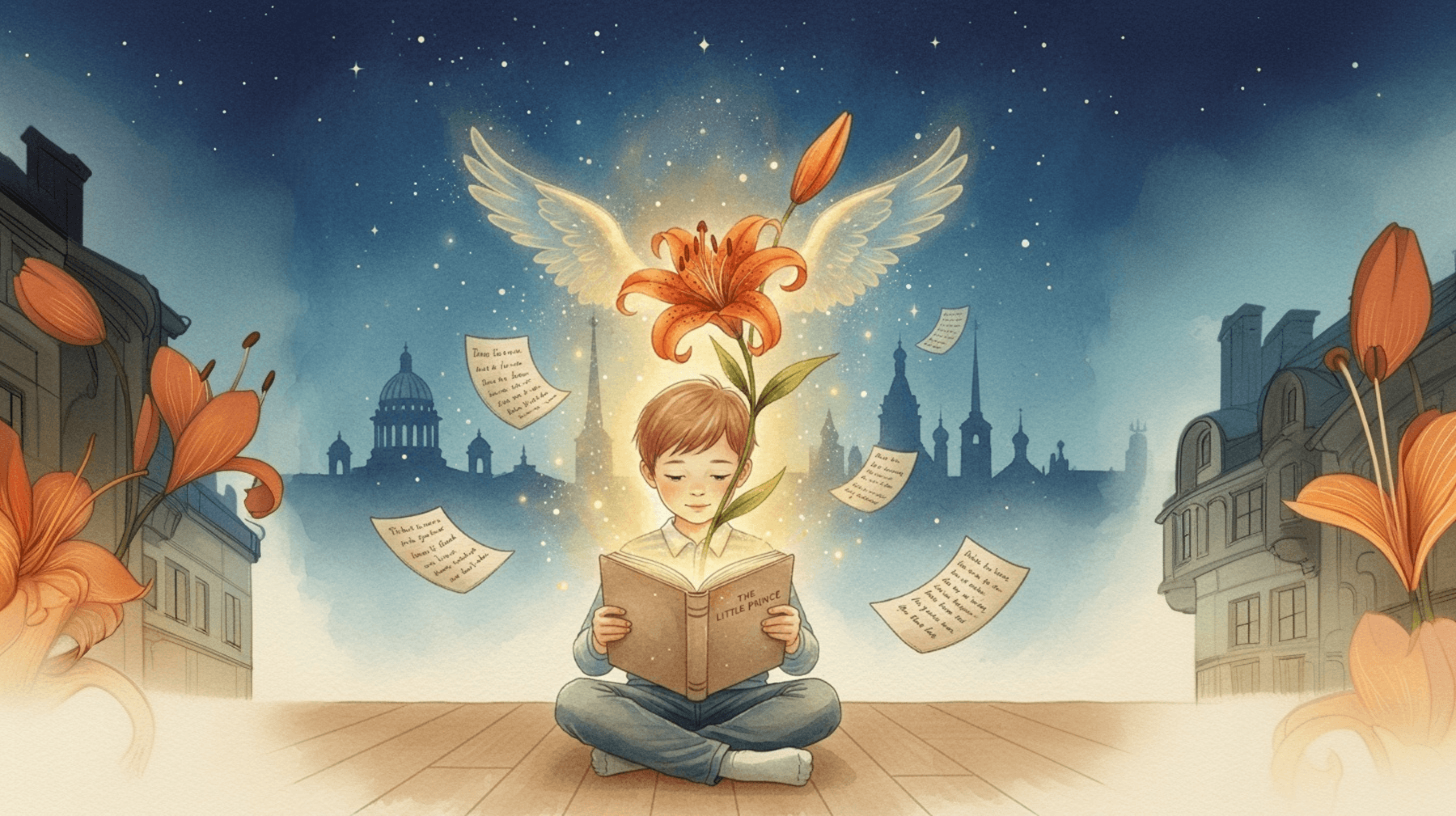
What is your earliest memory? For many, it is the scent of their childhood home, the aroma of a favorite meal, or the warmth of a mother’s hands. First conscious memories are often blurry, but mine is as sharp as if it happened yesterday.
I was four years old when a book first landed in my hands. It was a thin copy of Antoine de Saint-Exupéry’s The Little Prince—a hardcover with pages yellowed by time, featuring the author’s famous illustrations. That book had clearly lived in the house long before I was born.
I stared at the drawings, examining every detail, but the full story hidden within the large, even font slipped away from me. I did what any child would do: I burst into tears out of sheer frustration. Clutching the book to my chest, I ran to my grandmother and said just one word: "Teach." I suppose that was the moment my family realized there was no time to waste, and my reading lessons began.
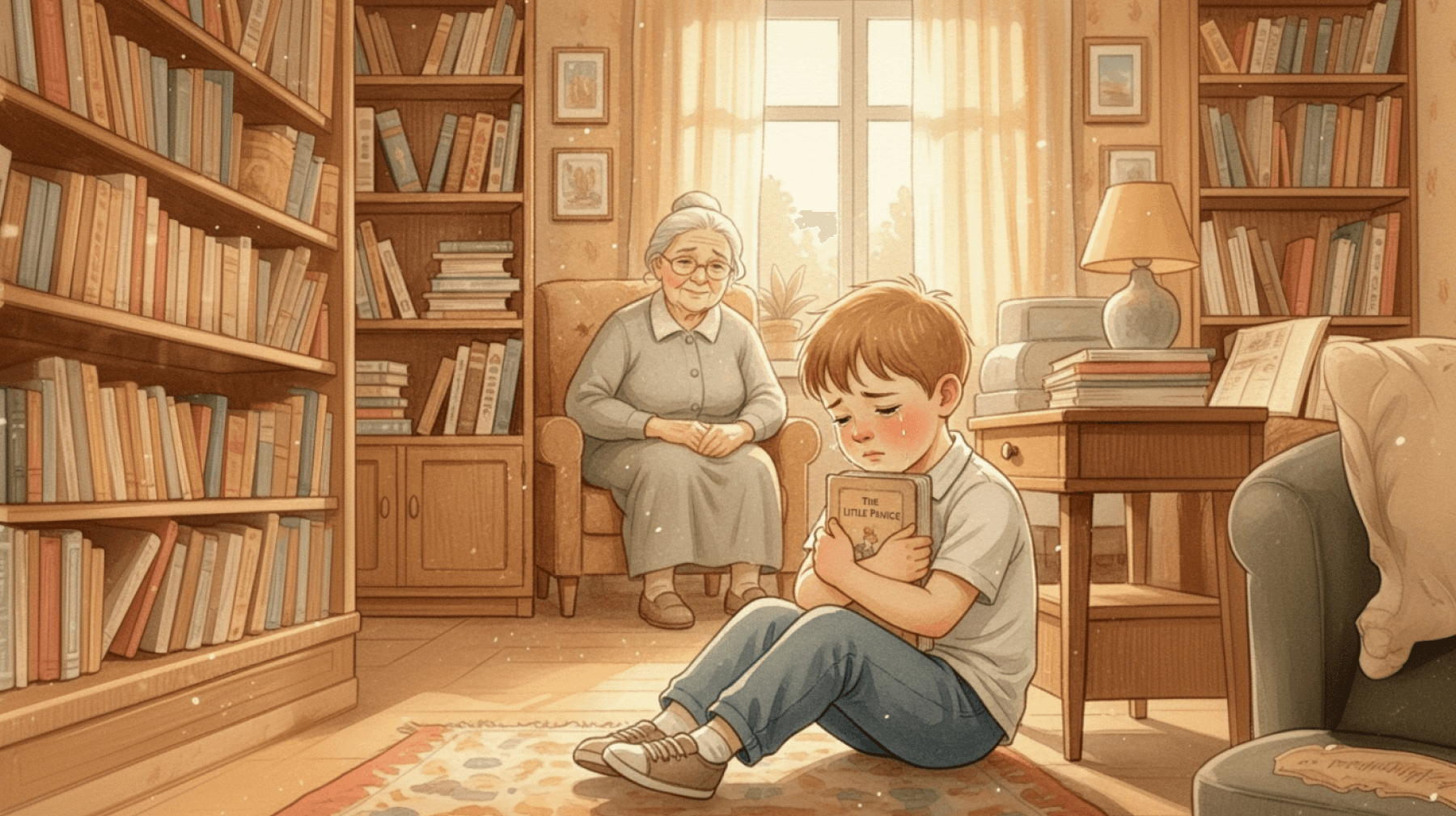
I remember my grandparents' apartment perfectly. The shelves of huge bookcases were lined with a diverse array of Russian and foreign literature—from Alexander Pushkin to Jack London. A separate shelf was dedicated to medical books belonging to my grandfather, a doctor. Naturally, as a curious child, I got my hands on all of them. Children's fairy tales were shuffled in with The Three Musketeers. From time to time, I’d stumble upon reference books on infectious diseases and classifications of illnesses. Each new book opened a new, previously unexplored world.
When I got older, my grandmother and mother showed me the real treasures: notebooks filled with poetry. Almost everyone in our family wrote: my mother, my older cousin, even my grandfather, who seemed so stern and reserved on the surface. Each notebook was carefully preserved in the family archive—a role played by a large cardboard box. It took my breath away. It was amazing how simple paper could reveal a completely different side of my family—a side that was writerly, elevated, and alive.
***
I suppose it’s no surprise that, over time, I started writing too. My first attempt was a completely absurd, childish poem about a magic tree. Unfortunately, I don’t remember the details, and the notepad containing it was lost to time.
However, I remember perfectly the first time I wrote something "serious." My mother had taken me on a trip—I don’t recall exactly if it was Vietnam or Turkey. we were riding in an open-air jeep through the desert. The golden sand was as bright as the scorching sun above us. This sparked a fantasy about angels—seraphim, to be precise. I thought their wings must be just as golden... That was the subject of my first poem. I was twelve years old, and surely the form was crooked and clumsy. But the important thing was that it was born, and in that moment, it felt as if I was being born a second time. I remember looking at the rhyming lines and thinking with childish delight: "Wait, I can do this?"
At first, my mother treated it with an ironic smile: a childhood whim that would pass. But it didn’t pass—not in a year, not in two. On my sixteenth birthday, she gave me three shiny notebooks with magnetic clasps and a real—a real!—fountain pen. You could fill it with ink and write like the poets of centuries past! I was ecstatic. But what touched me most wasn’t the pen itself. The gift was an acknowledgment from my mother: "I see you, and I know how important this is to you."
***
The turning point in my life happened much later, after high school. I moved to St. Petersburg, a city of creative souls, poets, and dreamers. by then, I was actively running social media groups for my poetry. Organizers of poetry evenings noticed me and invited me to perform. To say I was nervous would be a gross understatement. But stronger than the anxiety was an overwhelming happiness, as if I had already achieved my life's dream at eighteen.
The poetry reading took place in one of the many bars on Nevsky Prospect. It was noisy; glasses clinked, people chatted, but none of that mattered. I was young, surrounded by creative personalities just like me. I wanted to keep this memory forever. The event featured not just poets, but prose writers sharing fragments of their worlds, singers, and actors.
Finally, it was my turn. I don’t know what was shaking more: my knees or my voice. At one point, I wanted to turn around and run. I couldn't escape the intrusive thoughts: I don’t deserve to be here, my poems are worthless... But I had traveled too far from my small Far Eastern town to St. Petersburg to flee the stage I had strived for. Besides, I wasn’t alone—my friend had come for moral support and to act as my personal cameraman. I had declared beforehand that my first performance had to be captured on film, just as I had found those notebooks of family poetry.
While waiting for my turn, I listened to the others, clutching a glass of wine in a trembling hand. My friend nudged me playfully and told me not to overdo it. He needn't have worried—I didn’t take a single sip. I knew that in my state of nerves, the liquid would just get stuck in my throat; not a single muscle was obeying me.
The smiling host introduced me. The room fell silent—so silent my ears rang. And I began to read: stuttering occasionally, digging my fingernails into my palms until it hurt. My poems were always tragic and melancholic. Much later, I would describe that performance using the words of Alexander Vertinsky: "It feels like I am singing on the scaffold."
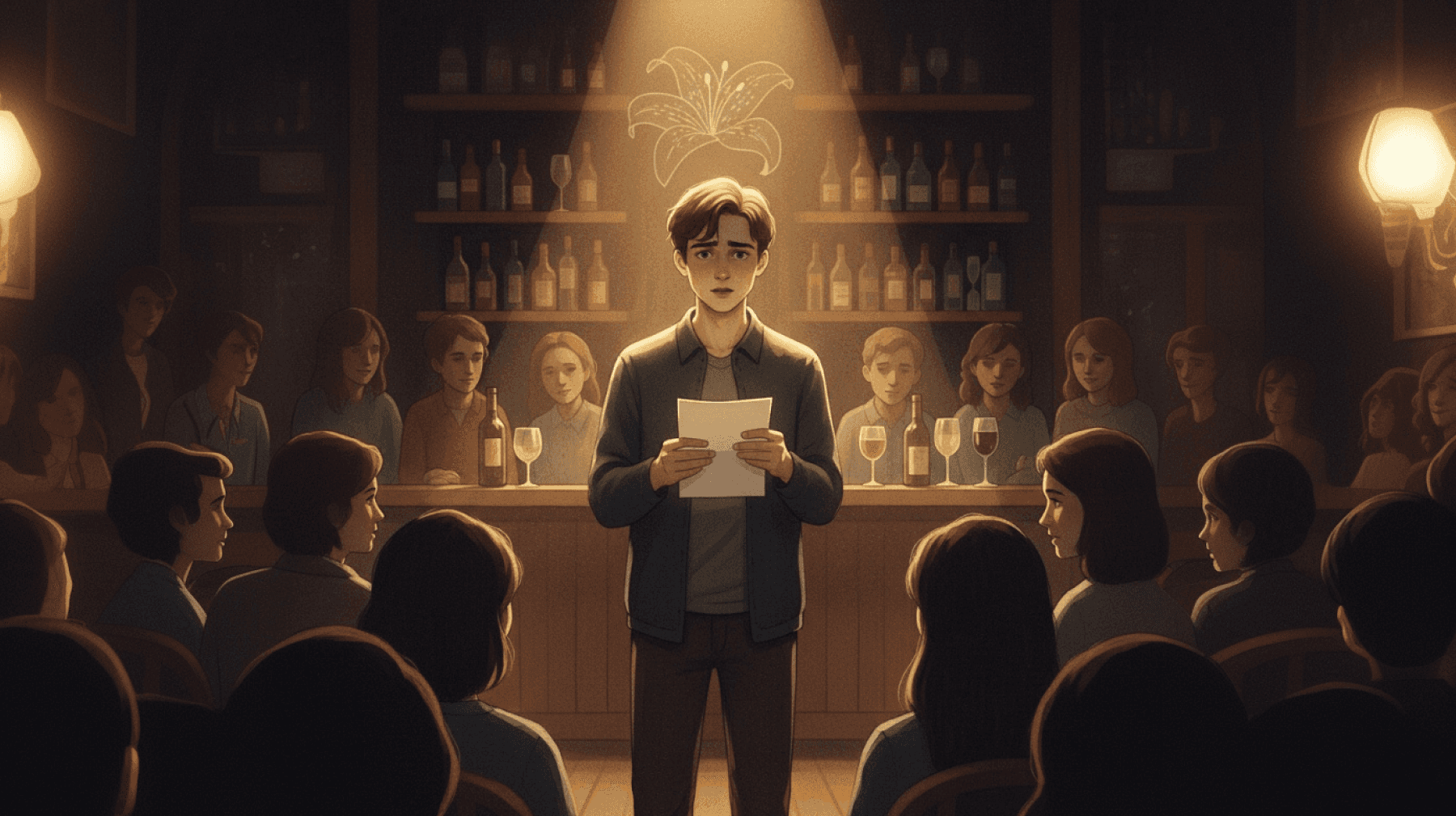
I had time to read about four poems. With every new line, my voice grew louder and more confident; I even managed to shoot a few smiles at the audience. I saved the most important, meaningful, and favorite poem for last. It was a narrative piece about two friends looking out a window at a city at night. They watched a poor woman wandering a dark path, a trembling drunkard yelling at his own shadow. The image of the city was vicious, even dirty. But there, amidst the gloom, a bright, fiery flower sprouted: "By the tavern, like a sign of purity, beauty, and kindness, blooms a bush of tiger lilies, almost aflame."
That tiger lily became my personal symbol and guide. A few months later, I went to a tattoo artist and had it inked on my forearm—a huge, bright bud blooming over a web of scars left by my grandmother’s aggressive cat.
***
That evening was the pivotal event of my creative life. But not the only one; it opened new paths. The performance shifted my perspective and gave me direction for the future. I began seeking out organizers myself, signing up for open mics, and my voice never trembled again. Like a seasoned collector, I gathered photos and videos. I archived my memories in notebooks and diaries—simply because I had no right to forget them.
My next major performance was on a cold summer day, coincidentally on Friendship Day. For some reason, that detail is etched in my memory. I staged a full performance, selecting poems with angelic or magical themes. That evening, wings made of snow-white feathers shone on my back. Since elementary school, I had attended a drama club—theater pulled at me just as strongly as poetry. Combining these two elements turned out to be a wonderful idea; with experience, I had learned to hold the stage. The organizers knew me by then, so when I walked out, they introduced me as a "creator of magical worlds and a fairytale minstrel." It was flattering—I remember my cheeks burning, a goofy, wide smile lifting the corners of my lips on its own. I was no longer the trembling boy stepping onto the boards for the first time: I had added gestures, expression, and a bold gaze into the crowd. I felt like this was what I lived for.
I am twenty-seven now. That eighteen-year-old boy is far behind me, and I no longer perform. But to say those performances didn’t influence me would be a shameless lie. After all, that first open book, those evenings spent with Grandma’s volumes of classics, those first unsure steps on stage—they defined my path.
I didn’t go to law school or study philology as I had planned in high school. Instead, I enrolled in Theater Studies, where instead of term papers we produced real plays, and instead of ordinary lecture halls, we studied under the vaulted ceilings of the Hermitage. My job today is directly related to writing and editing texts. So I can safely say that the delight from that first poem about angels has carried me through my whole life—right up to the tiger lily blooming on my skin and my creative career.
But the most important thing that guided me was the living example of my infinitely talented family. Who knows? If I hadn't found those notebooks, maybe I wouldn't have caught the fire of writing, wouldn't have made those first awkward attempts, wouldn't have found the stage or my audience. I am who I am because of that push. And words aren't my only passion. I subconsciously gravitate toward any form of creation, whether it’s embroidery or knitting. It’s not about the technical process, but about creating something new—whether it’s a stanza of poetry or a scarf coming off a crochet hook.
***
What is the point of this story? It is that even a fleeting memory can become a true treasure for those who unlock it. A few lines in an old notebook can ignite the spark of a creator; books kept for generations can trigger an unbearable desire to touch them.
I am at peace now. I will leave behind dozens of written pages, which I return to from time to time to remember who I was... and to understand who I have become. It was a priceless experience I would never dare to forget—and I hope I never will. I know for certain that life will throw many more amazing events my way, ones that will remain in my memory just like those performances in dim, cozy bars.
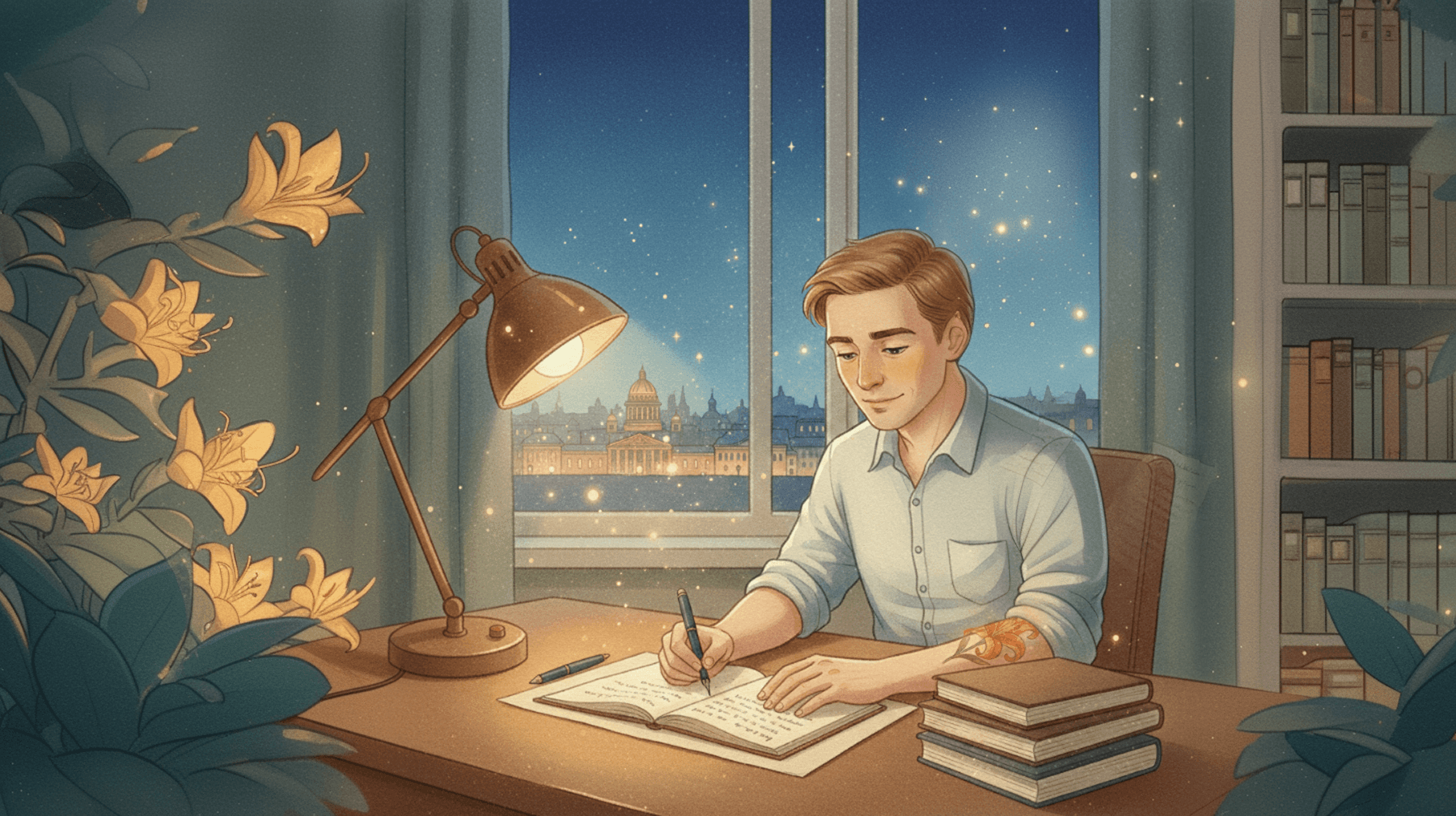
We change throughout our lives. Every event can be a turning point, earning a place not only in your memory but in the memories of your loved ones—and those who come after. I am certain of one thing: without the example of my family, I wouldn't have fallen in love with literature so early, nor would I have traveled such a long road. And for me, that road is the most important one of all.