The Gold Dust Treasure
28 Feb 2026
Gold dust scatters over time, but family legends endure forever
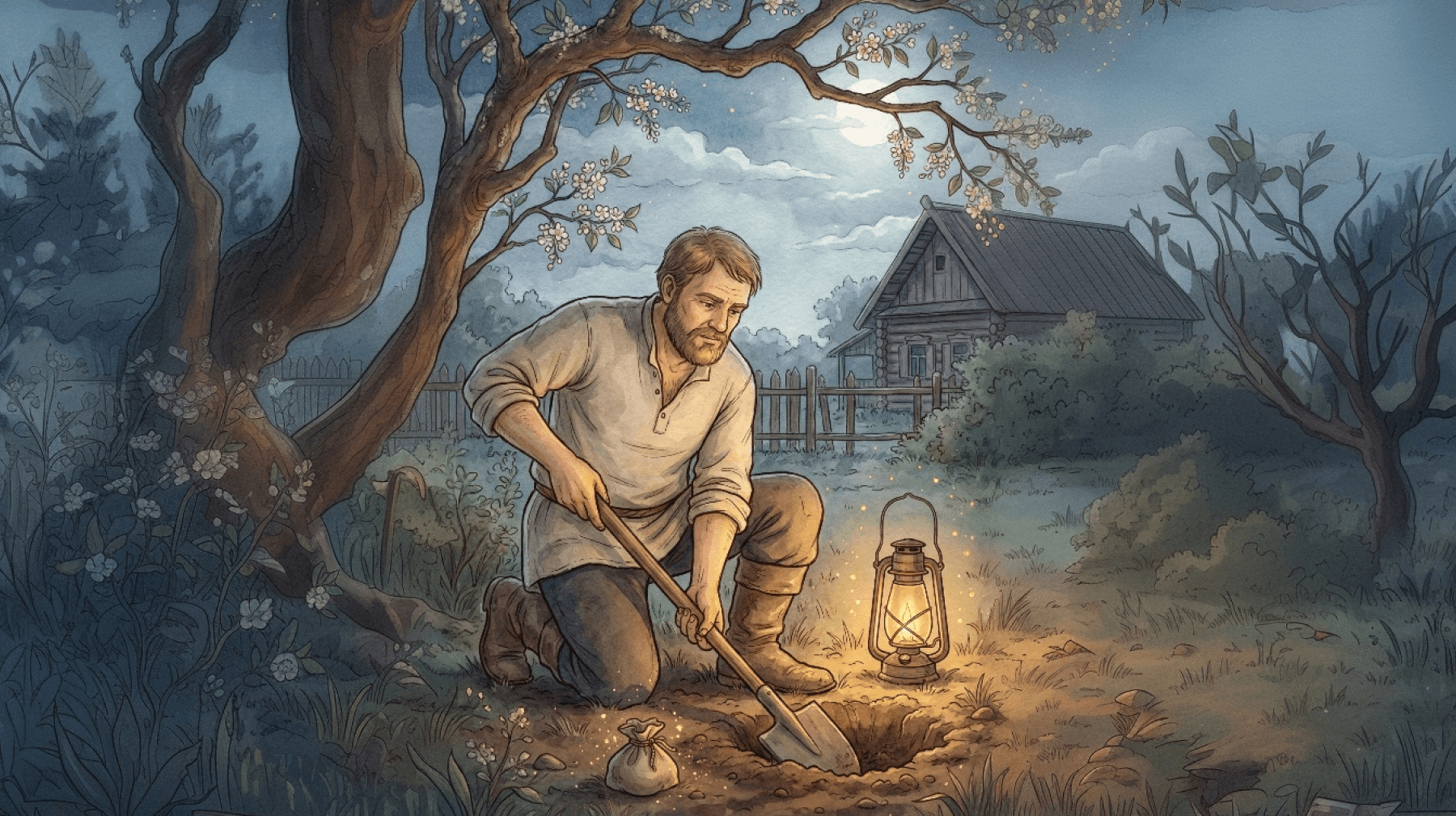
In my family, there is a legend about gold buried in the vegetable garden. It has everything: drama, detective mystery, intrigue, and deception. The protagonist is Nikolai—my great-grandfather on my father's side—and his father, my great-great-grandfather Fyodor. The main thing here, dear reader, is not to get the branch of the family tree tangled!
Perhaps one day this story will become a scene in a movie or a screenplay, but for now, it remains a tall tale—one that shaped my guiding principle in life.
**The Setting:** The early 20th century.
**The Location:** The Urals.
A true "gold fever" was raging here at the time—much like California, only a little earlier. The first "Russian" gold was actually found in 1745 by a peasant named Erofey Markov. Then, in 1814, a mining engineer named Lev Brusnitsyn made a new discovery: alluvial gold.
By the early 1820s, rich deposits of the precious metal were discovered near the Rezh, Verkh-Isetsk, and Verkh-Neyvinsk factories. Suddenly, everyone rushed to find gold. Just a statistic for context: in 1823, there were about 2,000 mines operating in the Urals. My great-great-grandfather Fyodor worked in one of these mining *artels* (cooperatives).
People from the Urals are independent, enterprising, and pragmatic. My ancestor was no exception. Instead of turning in all the gold mined and washed by the crew, he pocketed a portion of it. Over the years, he amassed a small fortune.
In our Ural village, no one had heard of dividends, interest rates, or investment portfolios, so his potential savings turned into a literal buried treasure. Instead of using a bank, my great-grandfather entrusted his gold to the earth. For some reason, I always picture a night with pouring rain, imagining my great-great-grandfather with an oil lamp, digging a hole at the edge of the garden under an old bird cherry tree. What is a family legend without a little romance?
Time passed, and Fyodor fell ill. Gravely ill. He realized he was dying. Medicine wasn't advanced back then; he likely took no pills, relying solely on folk remedies. He listened closely to his body, deciphering its signals, and at a certain point, he knew: the end was near.
By then, he could barely leave his bed. Fyodor asked his wife to call Kolya—his son from his first marriage. His wife, however, was no fool. She realized exactly what the dying man wanted to tell the son who was her stepson. So she lied. She told him Kolya had gone out into the night to herd the horses.
She quickly sent Nikolai away on an errand "across the river," ensuring he wouldn't reach his father in time. She knew the long journey would take several days. And she was right.
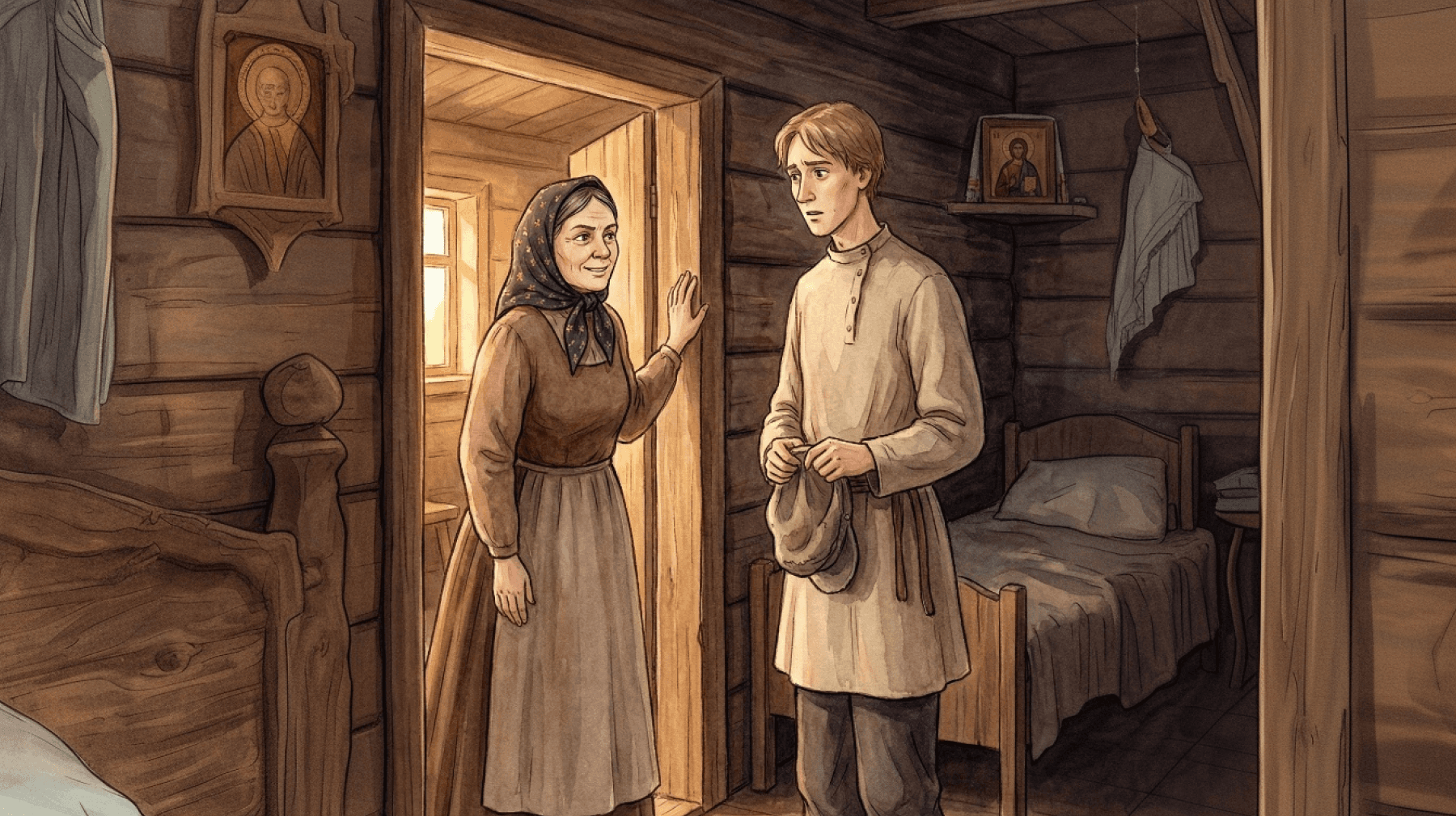
When Kolya returned home, his father had already passed away, taking his secret to the grave.
After the funeral, the widowed woman built a new house for herself and her own children. It was painfully obvious to everyone who had discovered the secret of the buried gold.
Kolya, the rightful son, received nothing. He simply left to live with his grandmother. It’s not that his life was particularly lucky after that, though he did marry for love—my grandmother Vassa. He fought in the Winter War against Finland, and no sooner had he returned than the draft came again: World War II. He went missing in action in 1942.
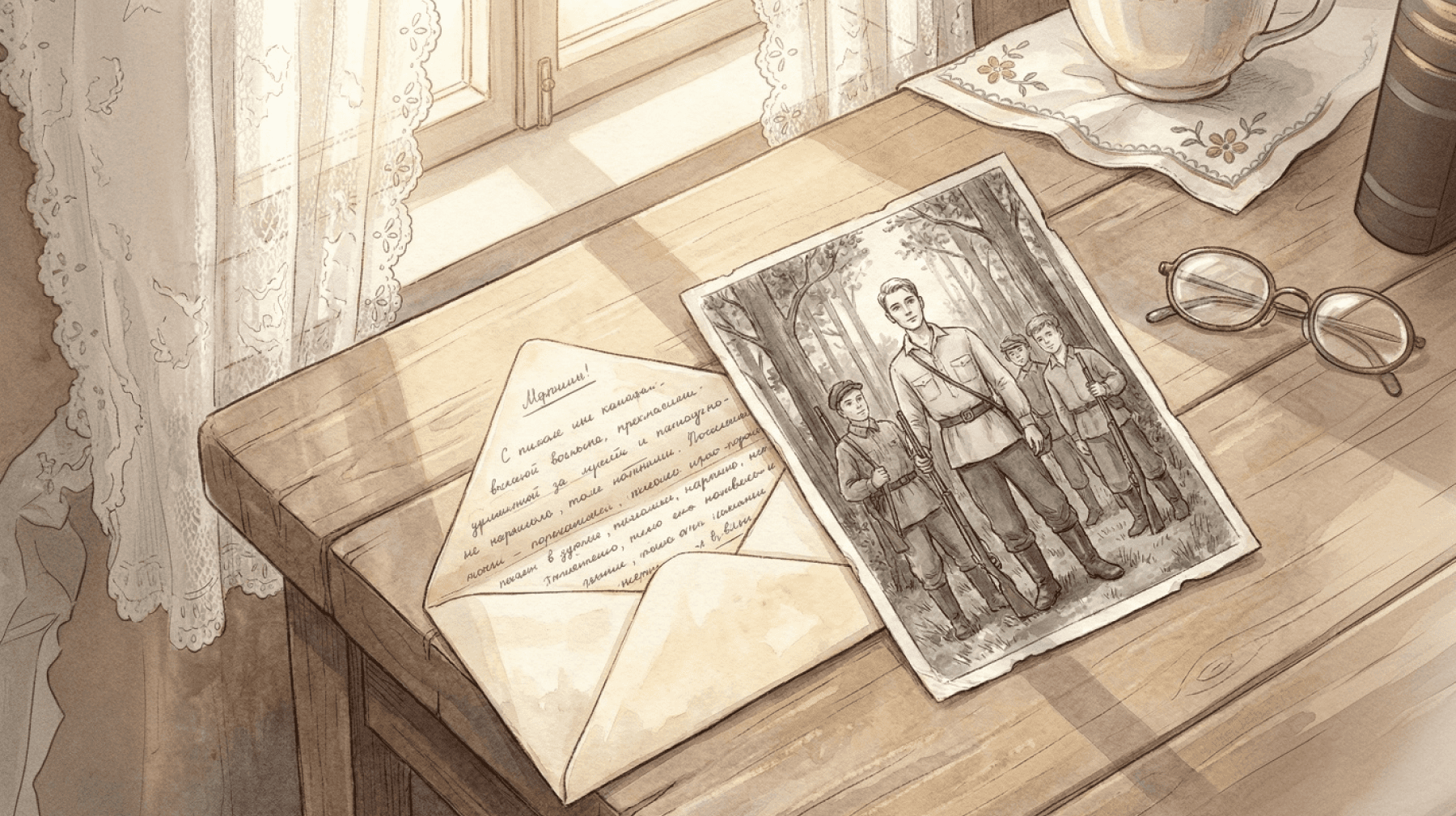
All that remains in our family is a triangular folded letter from the front and a single photograph: Nikolai—tall, slender, with a direct, open gaze, standing in a circle of friends while hunting. My dad, by the way, looks a bit like him.
***
In childhood, this story was almost a fairytale to me. Now, understanding the power of family scripts and legends, I can "decode" how this history influenced me and my relatives.
First, a mindset emerged: "Rely on yourself! No one is going to hand you your treasure!" On one hand, this instills strength, confidence, and independence. But there is a flip side—the men in our family find it very difficult to ask for help. Honestly, the women do too.
Second, for me personally, it became a childhood adventure. I was convinced that part of the treasure, or some other gold—or better yet, precious gems!—lay in the ground of my grandmother's garden. It didn't matter that it was a completely different house on completely different land. I wanted to believe in the fairytale.
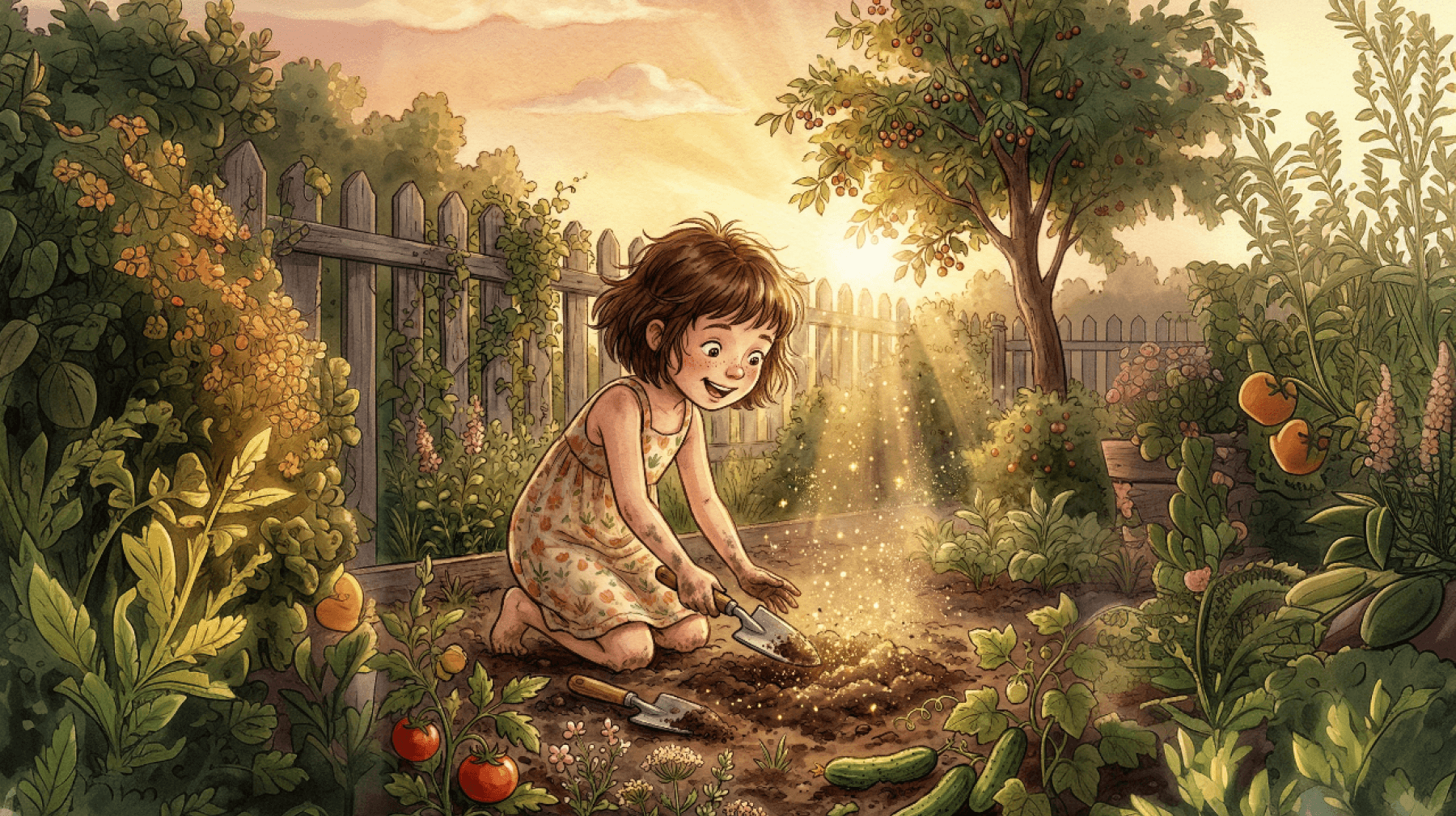
Over time, I realized that it wasn't about the hoard, but about the belief in miracles. My true treasure is that, under any circumstances, I believe in the best outcome. After all, the main thing is not finding the treasure, but never losing the ability to look for it. That is my gold.
Interestingly, as an adult, I learned a detail about how prospectors sometimes used an ancient method: they would take a sheepskin, dip it in the water, and particles of gold would settle in the fleece. Then they burned the skin, and the gold remained.
But what kind of gold? Gold dust!
Yet, when I listened to this legend as a child, my imagination drew not dust, but solid gold bars. What was actually there, we will never know. And perhaps the most valuable thing about this legend is that it remained just that—a legend.
My personal treasure made of gold dust.