Survive. Remember. Tell
28 Feb 2026
Stay close. We disappear not in death, but when no one remembers
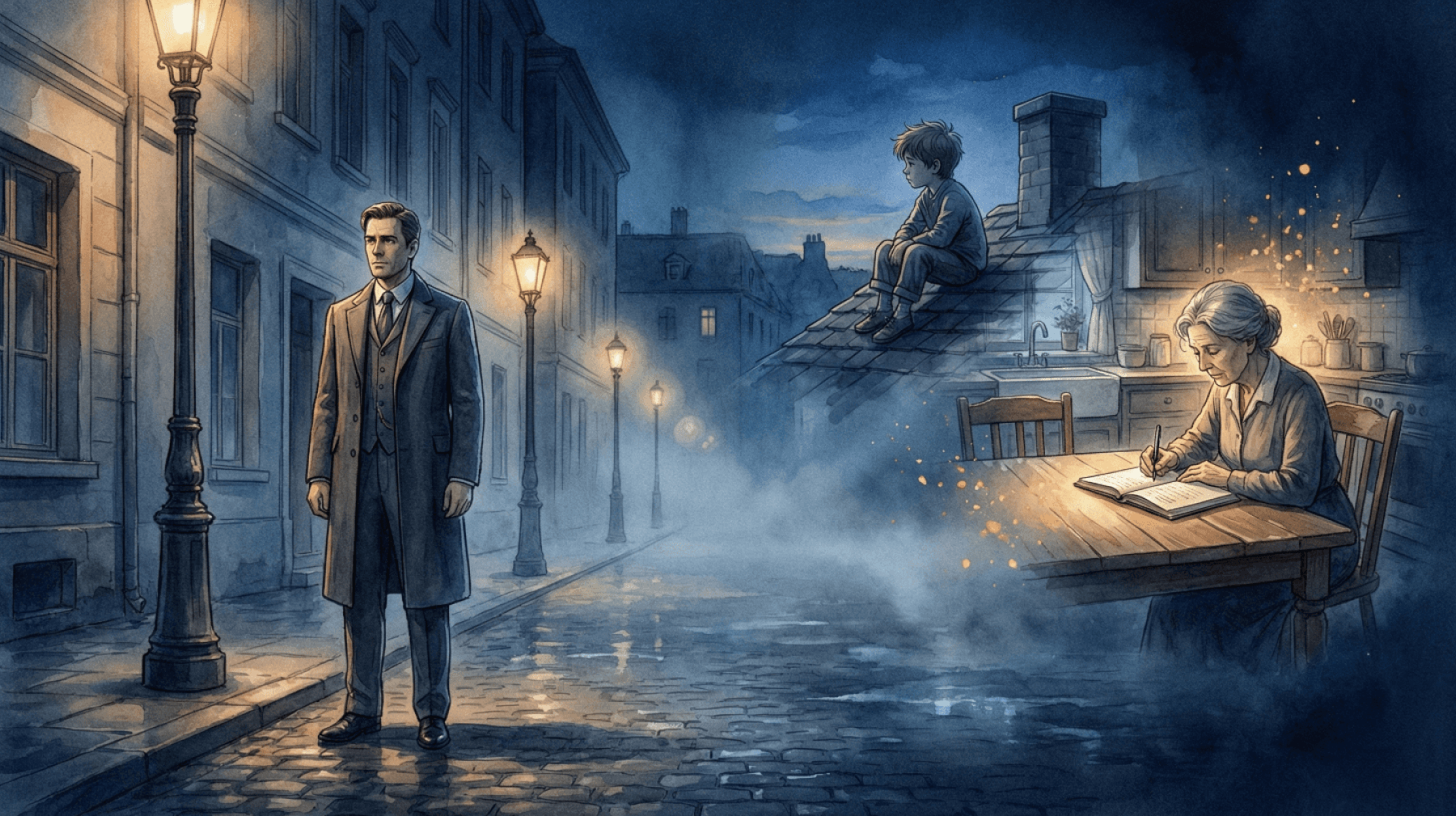
He stood among people who had just been speaking about him—with that particular kind of respect that always carries a tinge of admiration and the unspoken question: *"How did he manage to achieve it all?"* They spoke his name with confidence, as if it had long ceased to belong to him—a living person—and had become a symbol of success, a seal of trust.
He listened and nodded, just as he had nodded all his life when required to be appropriate. There was not a drop of joy in him, only the ingrained habit of keeping his composure in any situation. And yet, when he stepped out of the hall and found himself alone in the narrow corridor, away from the spotlight and others' expectations, a feeling suddenly descended upon him for which he could find no name: a strange emptiness, as if somewhere deep inside, someone had forgotten to turn on the light, and he had only just realized it many years later.
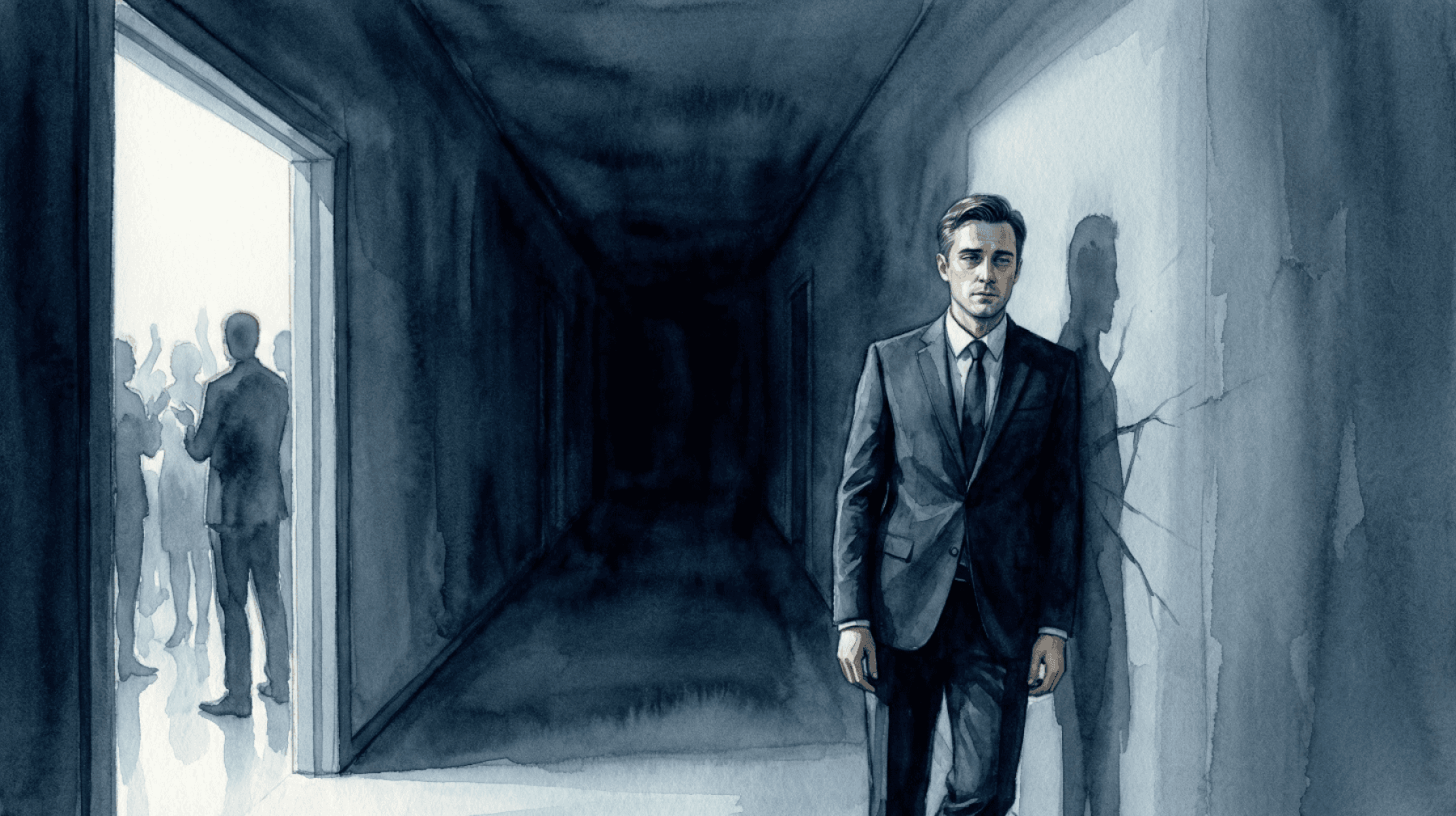
In five minutes, he would have to go back and say a few words about how he became who he is today. About how he became so successful and confident. But standing here, alone with himself, he suddenly realized with clarity that he didn't know how to single out any one thing from his life to explain this "how."
In his mind, he flipped through memories in search of the victories the audience so eagerly expected, but he increasingly understood that there were no victories. Not a single one. Every decision he had made in his life had been a necessity. A necessity to survive, to not remain where he was born, where life had prepared a certain fate for him.
He walked to the window and fixed his gaze on the path below. People were walking. Each in their own direction. Most of them had resigned themselves, deciding to live life as it is, as it happens, allowing life to carry them with the current, surrendering responsibility for themselves to fate. Only a few were like him: broken inside, but refusing to let the cracks become an excuse for weakness.
*"How did I achieve everything? Where did I find the strength?"*
And with that last question, along with a pain dulled by time, a memory rose within him. A memory he had long relegated to the inaccessible archives of his mind, but which had never disappeared: childhood, when he first understood that life would not be lenient.
***
In the house where he grew up, there was always order, but behind it lurked tension. His mother moved softly, almost inaudibly, as if her every movement could disrupt the fragile equilibrium of the home.
She spoke little. She loved him quietly, without words, as those who have no right to weakness love. Her care was utilitarian: to feed him on time, to cover him up, to avert his eyes from things he should not see.
His father, on the other hand, appeared abruptly, sweeping away all the order his mother had so diligently established. His presence always felt excessive—too loud, too heavy, too much. After he left, a fear remained in the house that would not dissipate for a long time, like cigarette smoke ingrained in the walls.
The boy understood early on that safety was not a given. It was a state that had to be maintained. By him, too. He did this in the only way available to a child: he tried not to bother anyone, not to cause inconvenience, and to be invisible.
He was quiet. He was diligent. He demanded nothing.
Thus, unnoticed by himself, he internalized the first law of his future: *to survive, one must be useful and convenient.*
In kindergarten, he was the child no one remembered. There was no need to notice him or watch him—he managed himself: quietly, without questions or objections.
In school, he didn't stand out either. He was what they called "normal." But inside this normality lived a tense determination which, had he ever seen a psychologist, would have been called an obsession—never to allow himself to remain here forever.
He loved to learn. In those pages, formulas, and notebooks, he found what he lacked in life: proof that chaos could be survived if one acted precisely, by the rules, and on time.
He didn't dream out loud. He accumulated knowledge, experience, strength.
Sometimes he caught himself thinking a strange thought: as if he wasn't living his life, but merely preparing for it. As if the real thing was still ahead, and he just had to endure this stretch of the road—not to break, not to lose form, not to let the world erase him.
And in this waiting for the future, there was something almost tragic: he didn't allow himself to live *now* because *"later"* seemed more important.
And so, he survived. At home, when his father started another scandal, cursing the day he met his mother. When his father tried with all his might to "erase" him from existence. Later, he would run to the roof, where there was only him, the boundless injustice of life, and his resolve to survive.
***
Sometimes in the evenings, his mother did a strange thing. She would sit at the table and write something in a notebook. For a long time, he didn't dare ask what it was, afraid of breaking the unspoken rules of the house. In their home, asking unnecessary questions was not done.
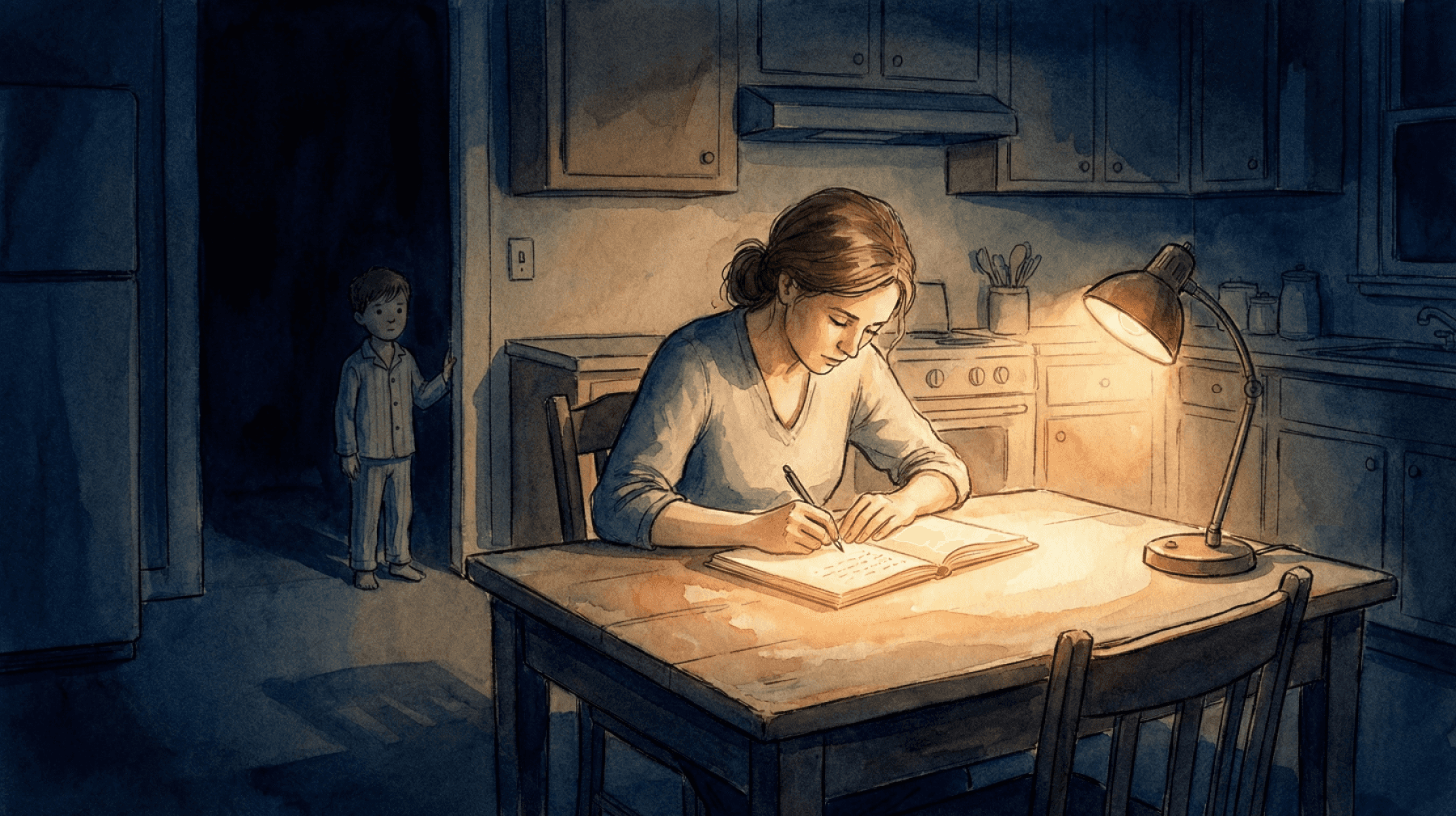
When curiosity finally got the better of him, he asked. She answered briefly and simply:
"So I don't forget."
He didn't understand.
"What can be forgotten if life consists of daily repetitions? Nothing changes and nothing gets better?"
She looked at him for a long time, as if deciding whether she could tell the truth now. Whether he was old enough to understand the importance of her notes—primarily for him.
"People disappear not when they die," she said finally after a long pause. "But when there is no one left to remember them."
At the time, the phrase passed him by without hooking onto anything. He even brushed it off like a speck of dust from his clothes, because back then, he had no place inside him where it could land. It returned later, when it became relevant and necessary in his life.
***
The opportunity to leave emerged not as a victory, but as a trial. It demanded his first truly adult decision: "to leave behind."
To leave his mother behind.
He hesitated for a long time. The thought of leaving echoed in him with guilt and hope. Yes, he saw a woman who had learned to live in constant readiness, listening at night for his father's heavy footsteps, which were followed by outbursts of anger and accusations. For him, leaving meant abandoning her to face this alone: without a witness, without an ally, without the one for whom she was still holding on.
He decided to talk to her.
His mother listened in silence. Then, just as quietly but confidently, she said:
"If you stay, you will stop being yourself. If you leave, you will be afraid, but fear can be survived. The loss of yourself cannot."
In those words lay all the pain of her own unmade decisions. And he knew what she was talking about.
He left. That same day—in the evening. Because he knew that if he stayed the night, he would stay forever.
From that moment, his life acquired external scope, but internally it was still compressed by tension. He could leave home, change cities, even countries, but he couldn't leave the state of constant alertness in which he had grown up. The habit remained forever: listening for footsteps, guessing the mood by a tone of voice or the sound of keys in a lock, being ready at any second to hide or run. Where others relaxed, he was tense.
He didn't trust calm, because he knew that the most terrible things always come without warning. And so the tension never left. It was his mode of existence, learned by heart back when vigilance meant survival.
He studied, worked, and achieved with the anxiety that refuses rest, just to avoid stopping. He had successes, but the joy from them was always delayed, as if it couldn't catch up to him.
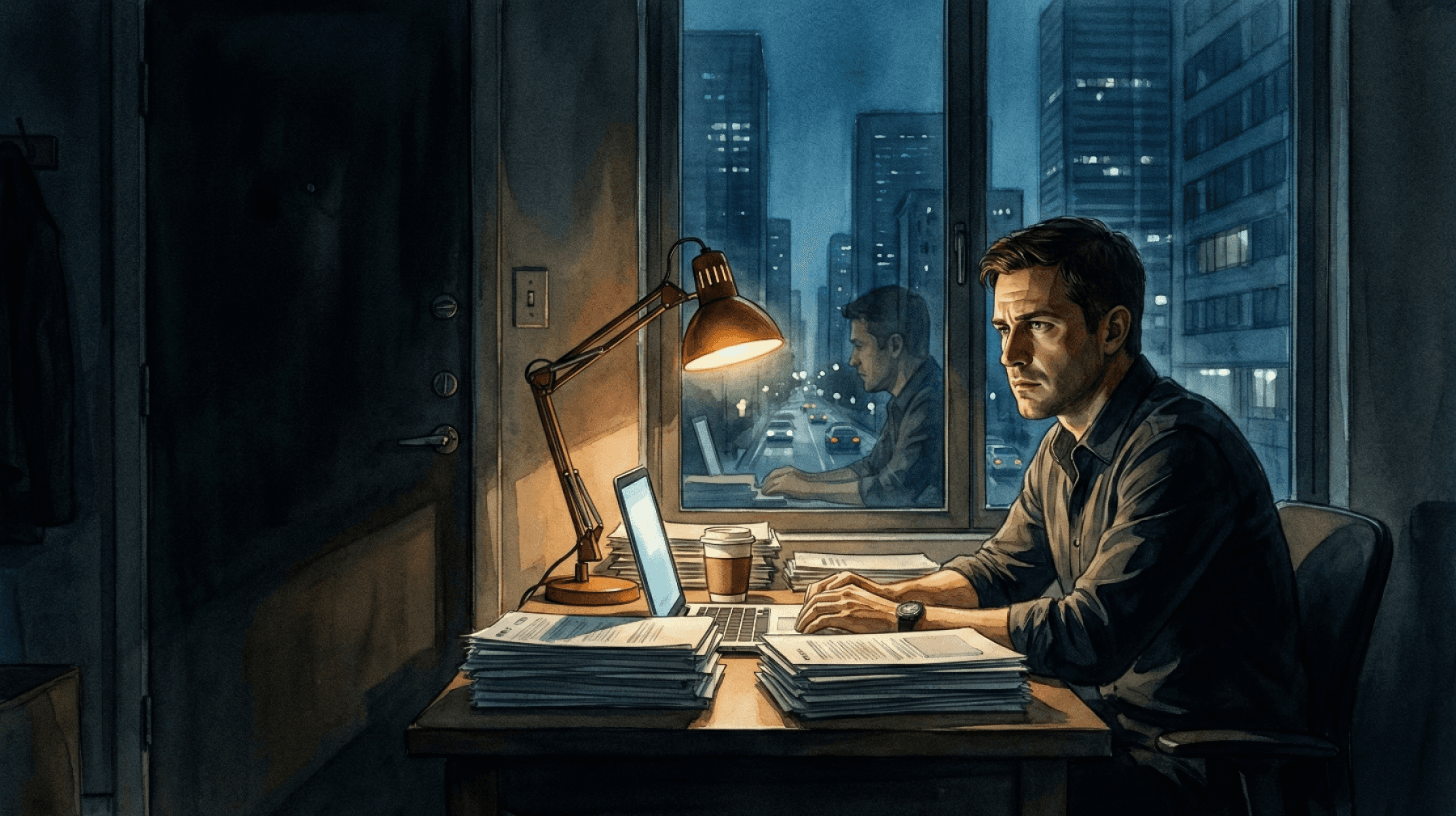
He became what they call a "self-made man." But the price of this "making" was high:
* He allowed himself no weakness.
* He preserved no past.
* He moved forward—quickly, decisively, without looking back.
And that is why the blow was so hard when his mother...
Died.
Her death became a void that suddenly exposed everything he had run so diligently to escape. He realized he knew almost nothing about her as a person. That his memories of her were a set of functions: she fed, she waited, she endured.
And then he remembered her notebook. He found it. And he saw life through her eyes. Her fears. Her decisions. Her losses. The small, unnoticed steps that made up her fate.
He read that notebook and, for the first time, allowed himself to be weak. Because he understood: all his strength had grown from her silent presence and support.
***
Later, as an adult, when asked about the secret of his success, he answered simply and confidently, just as she once had to him. Now he knew: a person rises from the life "prepared" for them by fate because they do not want to live that way.
And if he managed to stand on his own feet, if he managed to become who he became, it was not *despite* the past, but also *because* of it. Because the past, preserved on paper and sorted onto shelves, ceases to be a burden. It becomes a foundation.
He began to speak about this out loud. Memory is necessary. It is a way not to lose connection with the experience of generations.
And in doing so, he finally felt it: his road to life had concluded with the understanding that big dreams are always built from small, almost imperceptible steps. And that the most important of them is not to let those who made your life possible disappear.
***
Now, walking into the hall, he knew exactly what he would say. His answer was woven from a thousand memories, pain, and gratitude to his mother.
"How did you achieve everything? Where did you find the strength?" the host asked as he approached the microphone.
"Because I saw how people disappear," he said. "Not just die. They disappear while still alive, when no one remembers them, sees them, or hears them. When their labor and—most terrifyingly—their pain become invisible. I want to have a house that will not burn down. A house made of memory. That is what gives me the strength now to continue and not stop."
The event ended late. He walked out. It was quiet on the street. And for the first time in many years, he didn't feel he had to run. He walked slowly—and in this slowness lay his first victory: he finally allowed himself to be not just strong, but alive.
His mother's face floated in his mind—the way he sometimes saw her: when she forgot for a second that she had to hold it together, and simply looked at him with warmth.
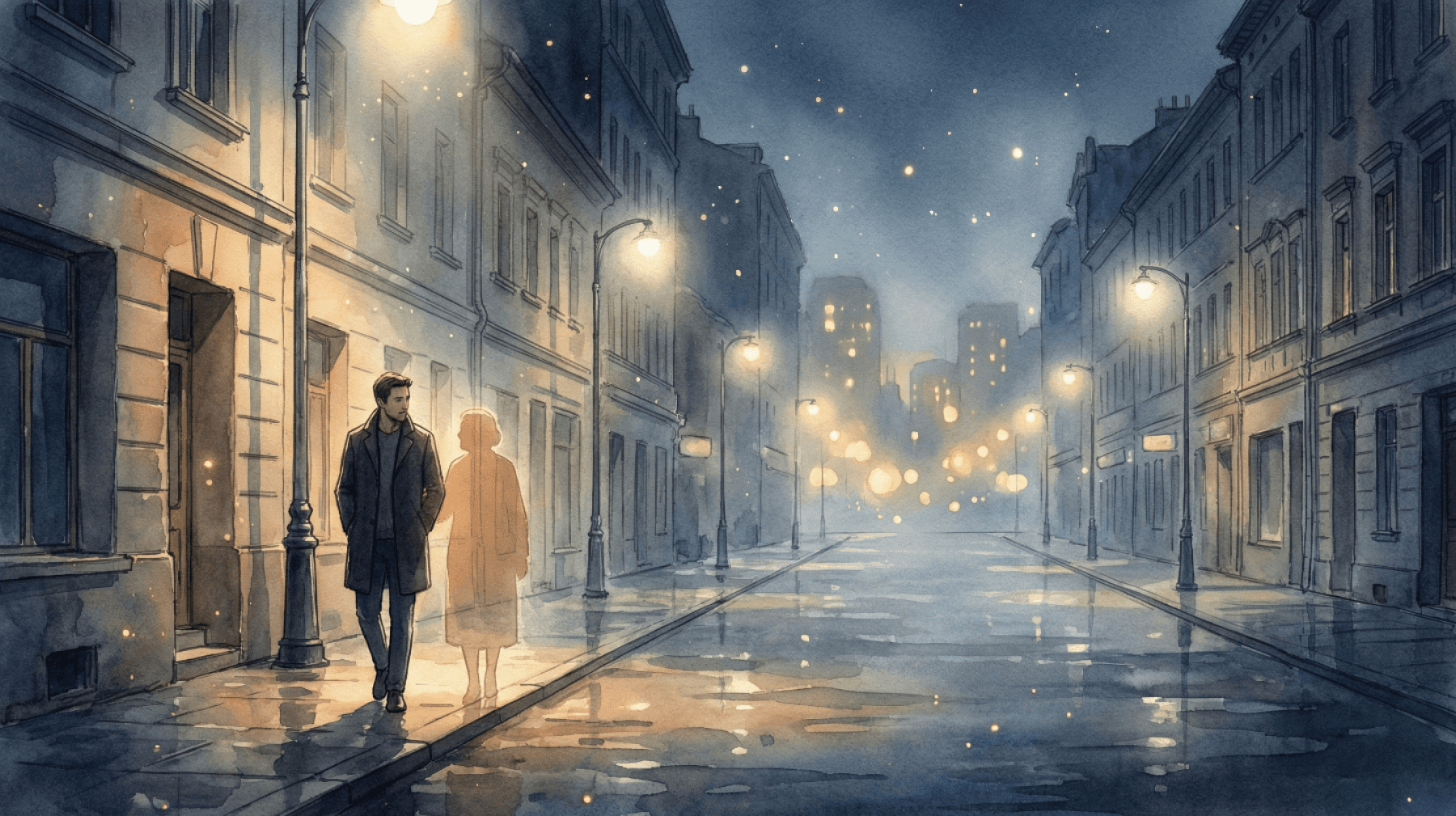
And thanks to her, he made his main conscious decision: not to let memory die along with people.
Because memory is not about the past. Memory is about who we are. And about what remains after us—not as a name on a plaque, but as a living story.