Grandma’s Ark
28 Feb 2026
Memories sweeter than cherry jam, and the true treasure—the family archive.
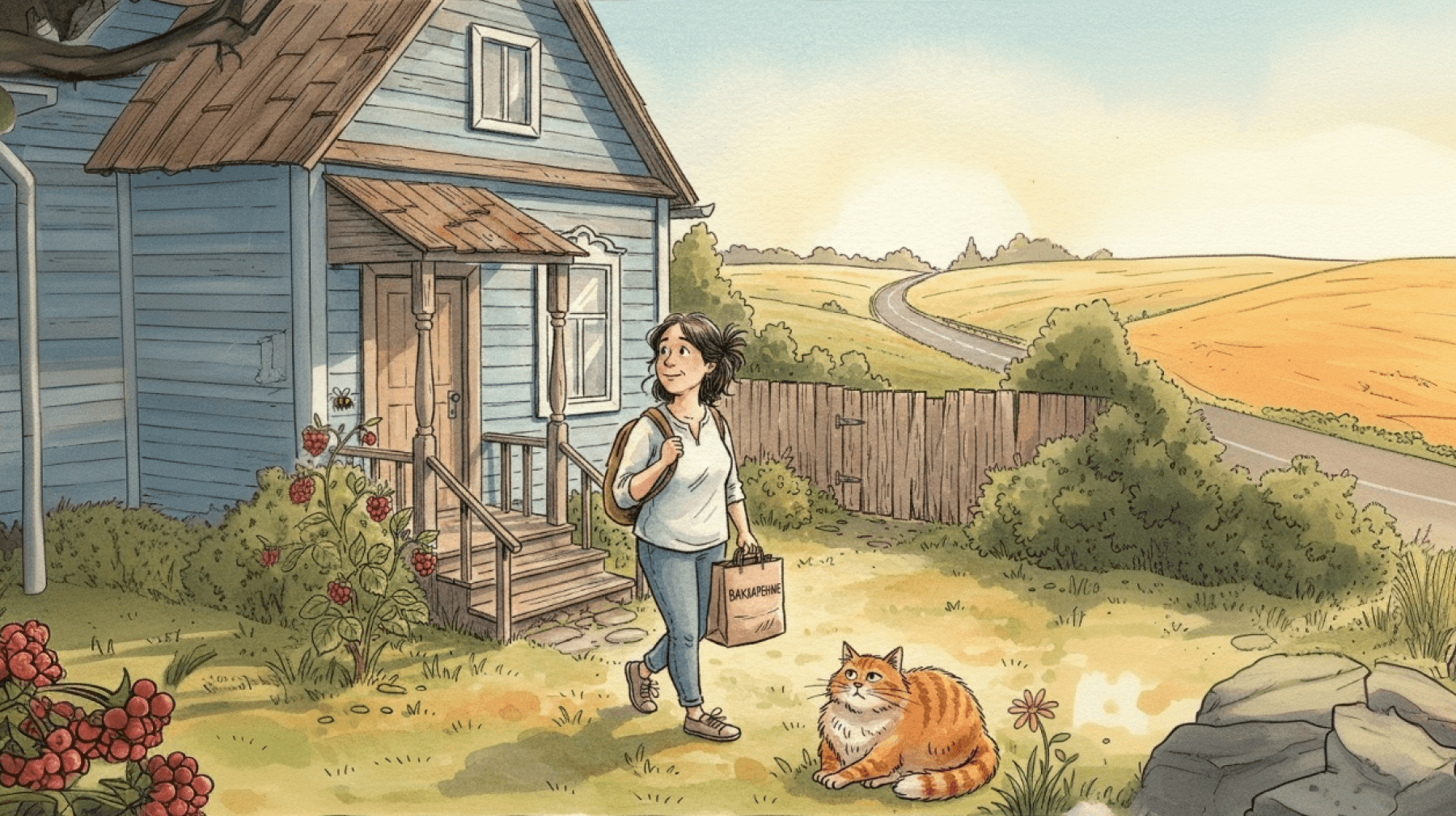
My trip to Grandma Tamara’s started as a minor, albeit dutiful, obligation: "Feed the cat while I’m at the sanatorium, and feel free to grab some jam from the cellar." The drive was painfully familiar—I felt I could have done it in my sleep. Sleep, incidentally, was calling to me much louder than the road was; it was Saturday morning, after all.
I started on the dull city thoroughfares, which eventually gave way to the highway, the landscape shifting from warehouses and billboards to open fields. I turned on a podcast about spaceships traversing the galaxy, but I listened with only half an ear. mostly thinking about my work plans for Monday. Several rather voluminous sets of instructions were waiting for me there, rubbing their hands together with a predatory grin.
Two hours later, Grandma’s house appeared at the end of the street. It was unassuming, clad in blue siding (the old logs couldn't withstand the weather on their own anymore). The porch was empty; Grandma had already left, and the house greeted me with a silent, frozen emptiness. The only sound was a bumblebee buzzing in the raspberry bushes by the fence.
The cat—Pushok, a pot-bellied ginger—treated my visit with philosophical indifference. He lazily nudged the empty bowl with his nose, meowed resentfully that food didn't immediately materialize, and wandered off to attend to his feline business. I poured him some dry food and headed for the cellar. I was actually quite interested in the cellar; as a child, I wasn’t allowed down there, frightened by stories of darkness and spiders. Later, I just never got around to it.
***
I didn’t find the trapdoor immediately. I had to peel back rug after rug until I suddenly recognized my own childhood patchwork quilt. Lifting the door was no small feat, either; the wood, swollen with dampness, weighed a ton. How Grandma manages it at eighty is a mystery.
The cellar was, as expected, dark and damp. It smelled of earth, old wood, and... history. It held more than just rows of jars filled with cherry and currant jam. In the far corner, I spotted an old chest bound with tarnished metal strips.
I tried to open it. To put it mildly, it didn’t work the first time. It didn’t creak mysteriously like in the movies; it was just stubbornly heavy. But with the help of a fire poker and a healthy dose of obstinacy, I defeated it.
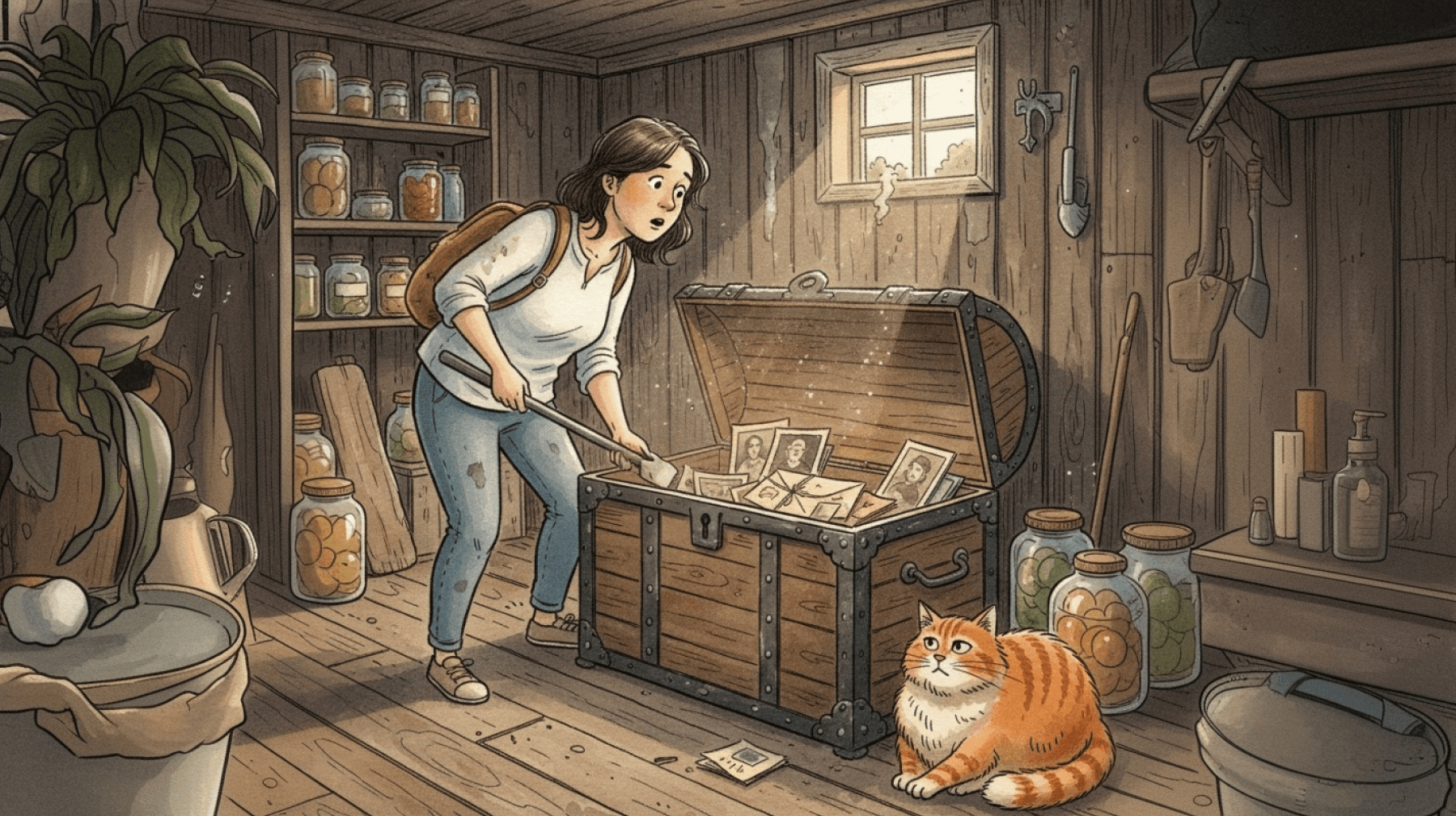
The smell that wafted out wasn’t dust, but time—a blend of old paper, dried flowers, and something elusive. I quickly realized that sorting through the contents in a dark basement was a bad idea. So, I hauled everything upstairs, climbed out of the dark, and began to examine my findings in the light.
First came the photos. Not neat albums, but heaps of snapshots tied with twine. There was my dad, Slava: about seven years old, lanky, wearing a shirt with an unexpectedly huge bow at the collar and an expression of utter bewilderment, sitting on a donkey at the Yalta Zoo. And there was his mother, Grandma Tamara, in her youth—an incredible beauty with a shock of curly hair, standing by some monument, laughing so contagiously that I found myself smiling back at her across the decades.
And this... who is this? A young man in a clearly homemade uniform. On the back, written in pencil: "Pavel, '41, before shipping out." My great-grandfather. I had only known him from a single formal portrait taken in his mature years. Here, he was almost my age, with eyes that looked slightly frightened but determined.
Beneath the photos were letters. Envelopes with yellowed stamps, covered in even handwriting. Letters from Great-Grandpa at the front—short, neat, mostly about the weather and asking after relatives. And the replies—touching notes ending with the childish scribbles of my then-little Grandpa Kostya: "Papa, come home, I saved a grasshopper in a box for you." The grasshopper hadn't survived, but this thin stack of papers had.
Then, a box of 8mm film. I almost cried out in joy. I knew there used to be an old projector stored in the upper cabinets. If only it had survived...
I climbed onto a wobbly chair, practically crawling into the crawlspace—and yes, it was there. It had waited for me. Sneezing from the thick layer of dust, I lowered it from the ancient heavens to the modern earth and even managed to get it working.
The world began to jump in black-and-white, then in frames tinged with faded orange. There were young people embracing, walking along an embankment eating ice cream. There was Grandma (so young!) planting a sapling near a newly built house. There was my father, a toddler, stomping uncertainly through the grass before falling right toward the lens, while off-screen, Grandma laughed—young and ringing.
***
The evening stretched well past midnight. Pushok, appreciating my lack of movement, settled on my lap, transforming into a living hot water bottle. I sorted, read, and watched. It was a strange feeling: as if I were spying on the most intimate moments of my closest people’s lives.
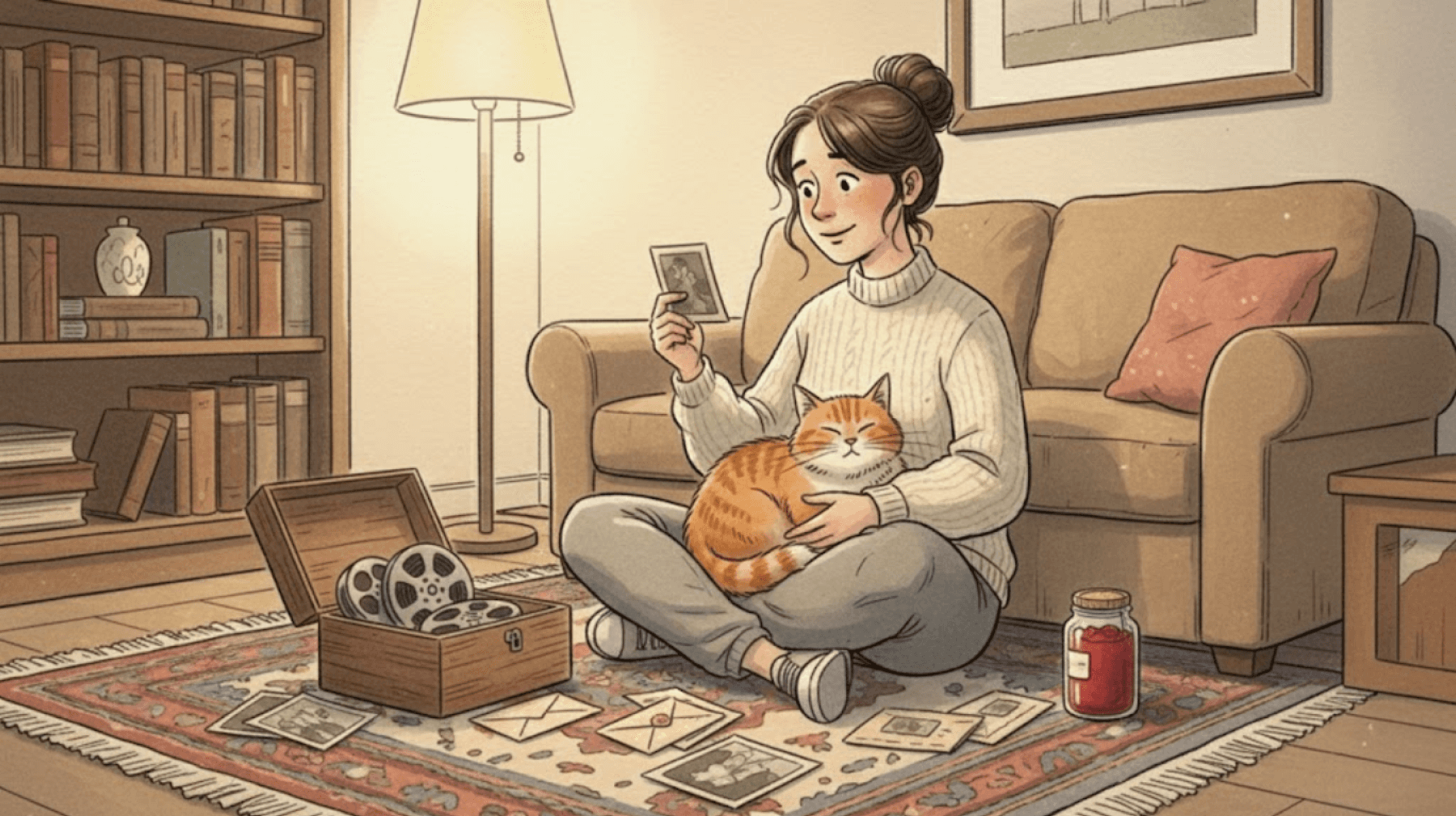
I learned so much: that Great-Grandma Lyuda wrote poetry (pretty bad poetry, to be honest); that Grandpa Kostya collected matchbox labels; and that my father dreamed of being a pilot, not an engineer—contrary to everything he told me when I was in high school. Suddenly, they transformed from mere "older relatives" into touching, funny, very living people.
What did I do? First, I scolded Pushok, who had migrated from my knees and decided a stack of letters made an ideal bed. Then I went to sleep myself, covering up with Grandma’s old coat because I didn’t have the energy to make the bed.
By Sunday morning, I had turned Grandma’s living room into a museum. Stacks grew on the floor: "Photos pre-1950," "Letters," "Dad’s Childhood," "Unidentified Aunts and Uncles (Sort!)." It was like assembling a jigsaw puzzle without the picture on the box.
I wrote down questions to ask Grandma, my parents, and the rest of the relatives later: "Who is the guy in the hat by the gramophone? Is it true Grandpa Kostya loved fishing so much he named his boat The Dream?"
History was taking on flesh and blood. It turned out Great-Grandma Lyuda was the heart and soul of the factory’s amateur theater, and the strange uniform on Great-Grandpa was actually a 1930s vocational school uniform.
***
The new week was approaching inexorably. I realized I couldn't wait for Grandma—she wasn't returning until Monday evening, and I had to be at the office early that morning. I grabbed several bundles of photos, shoved them into a box—having first evicted a disgruntled Pushok—and put it in the car.
I arrived in the city that evening and went straight to my parents’ place. From the doorway, they asked, "How’s the jam? Did you like it?" I realized I hadn't even touched it, so captivated was I by the snapshots and letters.
I started telling Mom and Dad what I had found in the chest—and suddenly I realized I wasn’t just seeing Mom Lena and Dad Slava anymore. I was seeing the boy with the bow tie on the donkey, the teenager with the stamp collection, and the young man in love from the silent film. I saw the young woman looking cautiously around her new home. I saw them not just as who they are to me—but as themselves, in the fullness of their lives.
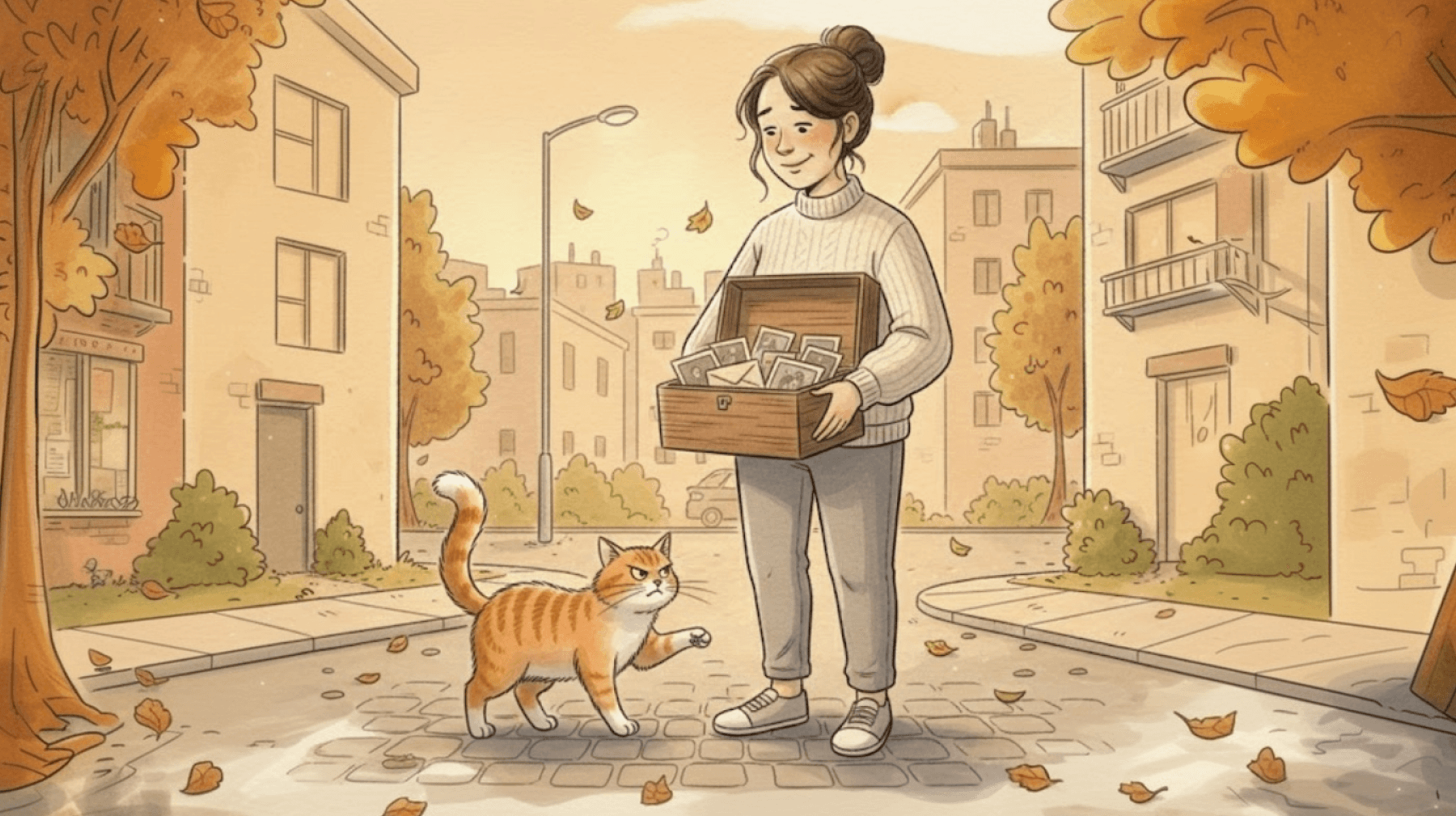
What will I do with these photos, letters, and films? I’ll probably scan them, catalog them, photograph them, and store them in digital archives rather than basement ones. I’ll be hauling more than one box of old photos from Grandma’s house in the future—and Pushok will just have to keep being angry at me for depriving him of his cardboard beds.